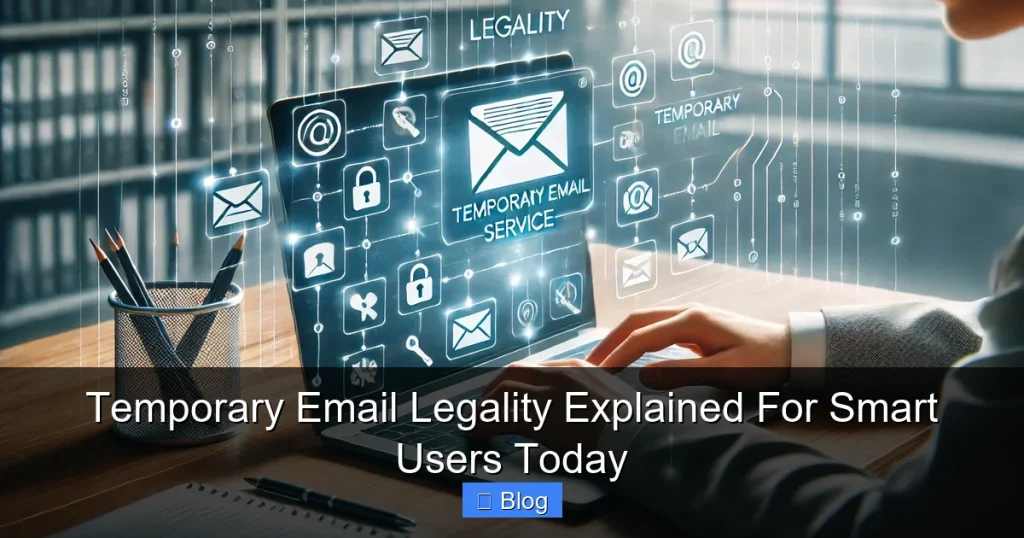

Temporary email services are legal for legitimate privacy protection and avoiding spam, but become illegal when used for fraud, spamming, or bypassing security measures. Smart users must understand that while disposable inboxes offer convenience, their misuse violates anti-spam laws and platform terms, risking account bans or legal action. Always prioritize ethical use to safeguard your digital footprint.
This is a comprehensive guide about temporary email legality.
Key Takeaways
- Temporary emails are generally legal for legitimate use, but illegal activities remain punishable.
- Never share sensitive data via temporary emails due to inherent security vulnerabilities.
- Check service terms carefully as many platforms explicitly ban temporary email usage.
- Avoid fraud or deception with temporary emails to prevent legal consequences.
- Understand jurisdiction-specific laws that may restrict temporary email use in certain regions.
- Use only for non-critical sign-ups to protect your primary email from spam.
Frequently Asked Questions
What is temporary email legality and why does it matter?
Temporary email legality refers to the legal boundaries around using disposable email addresses for online activities. It matters because while legitimate privacy uses are generally permitted, illegal applications like fraud or spam can lead to serious consequences. Understanding these rules helps you avoid unintentional violations.
Is using a temporary email address always illegal?
No, using temporary emails isn’t inherently illegal—they’re legally acceptable for privacy protection, avoiding spam, or testing services. However, legality depends on your intent: using them for fraud, phishing, or bypassing security violates laws in most jurisdictions. Always consider context and purpose.
How does temporary email legality vary by country?
Legality differs globally; some countries like Germany strictly regulate disposable emails under data protection laws, while others like the U.S. focus on intent rather than the tool itself. Always check local regulations, especially for financial or sensitive transactions, as non-compliance risks fines or account bans.
Can temporary email services get me in legal trouble?
Yes, if used for illegal activities like identity theft, money laundering, or violating platform terms (e.g., fake sign-ups), you could face civil lawsuits or criminal charges. Even accidental misuse—like signing up for services prohibiting disposable emails—may trigger account suspension or legal scrutiny from providers.
Are there legitimate uses for temporary emails that avoid legal issues?
Absolutely: temporary emails are legally safe for one-time newsletter sign-ups, avoiding spam, or testing websites without revealing your primary address. Just ensure you’re not deceiving platforms, violating terms of service, or handling sensitive data like banking—where real identities are legally required.
What should I know about temporary email legality before signing up for services?
Always review a platform’s terms of service, as many prohibit temporary emails for security reasons. Avoid using them for financial, government, or identity-verified accounts where real emails are legally mandated. When in doubt, prioritize transparency to stay compliant with temporary email legality standards.