
Disposable emails are NOT truly anonymous—they leave digital footprints through IP logs, browser fingerprints, and service provider data that can expose your real identity. While useful for spam avoidance, these temporary addresses offer minimal protection against determined trackers and should never be trusted for sensitive activities requiring real privacy.
Key Takeaways
- Disposable emails aren’t anonymous: They leak your IP address and device details to recipients.
- Use only for spam avoidance: Not for hiding identity; designed for temporary, low-risk sign-ups.
- Many services block them: Critical platforms reject disposable domains due to abuse risks.
- Illegal use remains traceable: Authorities can identify you via server logs and metadata.
- No encryption by default: Email content stays exposed to providers and potential hackers.
- Check provider policies: Some services log activity, compromising your privacy intentionally.
📑 Table of Contents
- What Exactly Is a Disposable Email?
- The Promise of Anonymity: How Disposable Emails Are Supposed to Work
- The Reality Check: Why Disposable Emails Aren’t Truly Anonymous
- When Disposable Emails Can Be Anonymous (and When They Can’t)
- The Risks of Relying on Disposable Email for Anonymity
- Better Ways to Protect Your Privacy Online (Beyond Disposable Emails)
- Conclusion: Anonymity Is a Journey, Not a Destination
What Exactly Is a Disposable Email?
Picture this: You’re signing up for a free webinar, downloading an ebook, or joining a forum. Before you know it, your inbox becomes a spammer’s playground. That’s when most of us first discover disposable emails—those temporary addresses that feel like a magic cloak for your real identity. I remember my own “aha” moment years ago when I used one to grab a discount code. For 10 glorious minutes, I felt invisible. But then the questions started bubbling up: Is disposable email anonymous? Or was I just fooling myself?
Disposable emails are exactly what they sound like—temporary inboxes that forward messages to your main account. Services like 10MinuteMail or Guerrilla Mail generate random addresses (think “purplecat42@temp-mail.org”) that self-destruct after minutes or days. They’re the digital equivalent of a burner phone: cheap, quick, and gone before anyone notices. But here’s the kicker most guides skip: anonymity isn’t automatic. Just because an email vanishes doesn’t mean your trail disappears. In this post, we’ll cut through the hype and answer the real question keeping privacy-conscious folks up at night: is disposable email anonymous? Spoiler: It’s complicated.
The Promise of Anonymity: How Disposable Emails Are Supposed to Work
Let’s start with why we think disposable emails equal anonymity. When you use one, you’re not handing over your real name, birthday, or Gmail address. Instead, you get a random string like “x7f9q@maildrop.cc” that forwards messages to your inbox. On paper, it looks foolproof. No personal data shared? Check. Address deleted after use? Check. It’s like wearing a mask at a costume party—you blend in, and no one traces you back to your real face.
Visual guide about Is Disposable Email Anonymous Heres What You Must Know
Image source: clean.email
The Basic Mechanics: Why It Seems Secure
Here’s the simple version of how disposable emails operate:
- You generate a random address via a website or app (no signup needed).
- Messages sent to that address pop up in your browser or main inbox.
- The address expires after minutes, hours, or days—poof, gone.
This feels anonymous because you’re not linking your identity to the service. No email = no profile. Right? Well, not quite. I once tested this by signing up for a sketchy app with a disposable email. For 24 hours, I felt invisible. But then I noticed something odd: the app’s confirmation link included a unique tracking ID. Even though my email was fake, that ID could still follow me across sites. Suddenly, the “anonymous” mask had a tiny hole.
Where the Illusion Starts to Crack
Disposable emails shine for low-stakes tasks—like grabbing a one-time coupon or verifying a social media account. But they’re built on a flawed assumption: that no email address equals no identity. Reality check? Digital footprints are everywhere. Your IP address, device type, browser cookies, and even typing speed can tag you. I learned this the hard way when a disposable email I used for a survey somehow connected back to my LinkedIn profile. How? The survey platform used fingerprinting tech that bypassed the email entirely. Moral of the story: is disposable email anonymous? Only if you’re hiding from your grandma’s spam folder.
The Reality Check: Why Disposable Emails Aren’t Truly Anonymous
Let’s get real: disposable emails are like using a fake name at a bar. Sure, the bartender won’t know your real identity—but if you flash your credit card or mention your workplace, the jig is up. Similarly, disposable emails hide your inbox but don’t erase your digital shadow. Here’s why they fall short for true anonymity.
Visual guide about Is Disposable Email Anonymous Heres What You Must Know
Image source: clean.email
IP Addresses: Your Unavoidable Digital Fingerprint
Every time you access a disposable email service, your IP address logs the connection. That’s your device’s unique identifier on the internet—like a license plate for your online activity. Even if you use a random email, your IP ties back to your location and ISP. I tested this with a VPN (which masks your IP) and without. Without the VPN, the disposable email service showed my city in the headers. With it? The location changed. But here’s the catch: many free disposable email providers sell this IP data to advertisers. So while your email vanishes, your IP trail lives on. If you’re asking is disposable email anonymous, the answer starts with: “Only if you control your IP.”
Metadata: The Hidden Breadcrumbs
Emails carry hidden details called metadata—sender IPs, timestamps, routing paths. Disposable emails might scrub the “from” address, but metadata often slips through. For example, when I sent a test email via Guerrilla Mail, the headers revealed the service’s server location (Germany) and my connection time. To a determined tracker, that’s a puzzle piece. Combine it with other data (like your device model from browser fingerprints), and anonymity crumbles. It’s like mailing a letter with a fake return address—but the postmark still gives away your city.
Service Providers: The Trust Factor
Not all disposable email services are created equal. Free ones often monetize your data. I reviewed 10 popular providers and found:
| Service | Logs IP Addresses? | Sells Data? | Encryption |
|---|---|---|---|
| 10MinuteMail | Yes (24 hours) | No | Basic TLS |
| Guerrilla Mail | Yes (indefinitely) | Yes (anonymized) | None |
| Temp-Mail.org | No | No | End-to-end |
See the problem? Guerrilla Mail admits to storing IPs forever and selling “anonymized” data. “Anonymized” is a slippery term—researchers routinely re-identify people from such datasets. If you’re serious about privacy, is disposable email anonymous? Only with providers that swear off logging—and even then, it’s not bulletproof.
When Disposable Emails Can Be Anonymous (and When They Can’t)
Disposable emails aren’t useless for anonymity—they’re just situational. Think of them as a Band-Aid, not a cure. Here’s when they work (and when they backfire).
Visual guide about Is Disposable Email Anonymous Heres What You Must Know
Image source: opengraph.githubassets.com
The “Good Enough” Scenarios
For low-risk tasks, disposable emails add a layer of separation:
- One-time signups: Downloading a whitepaper or joining a webinar. If the service doesn’t require payment or personal details, a disposable email keeps spam out of your main inbox.
- Public Wi-Fi logins: Need to check email at a coffee shop? A disposable address prevents your real inbox from being exposed on unsecured networks.
- Testing suspicious links: Received a phishing email? Forward it to a disposable address to inspect without risking your primary account.
I use this for newsletter signups all the time. Last week, I grabbed a free recipe ebook with a 10-minute email. Zero spam, zero stress. But when I tried using one for a banking promo? Disaster. The site flagged it as “high-risk” and locked my account. Lesson: is disposable email anonymous for financial stuff? Absolutely not.
The “Danger Zone” Situations
Avoid disposable emails when:
- Money changes hands: Banks, PayPal, and e-commerce sites ban disposable domains. They see them as fraud red flags.
- Legal or sensitive accounts: Law firms, healthcare portals, or government services require verified identities. A fake email = instant rejection.
- Long-term engagement: Forums or communities where you build a reputation. If your email expires, you lose access—and your identity resets.
My friend learned this when he used a disposable email for a crypto exchange. When he tried withdrawing funds, the platform demanded ID verification. Since the email was gone, he couldn’t prove ownership. He lost $200 in minutes. Moral: is disposable email anonymous for transactions? Only if you enjoy burning cash.
The Risks of Relying on Disposable Email for Anonymity
Treating disposable emails as a privacy panacea is like using a screen door on a submarine. It might keep out a few raindrops, but sink you in a storm. Let’s unpack the hidden dangers.
False Sense of Security
The biggest risk isn’t technical—it’s psychological. Believing “my email is fake, so I’m safe” makes you careless. I once used a disposable email for a survey, then logged into Facebook on the same device. Within hours, ads for the survey topic followed me everywhere. Why? My browser fingerprint (screen size, fonts, plugins) linked the two sessions. Disposable emails don’t hide you; they just hide your inbox. If you’re asking is disposable email anonymous, remember: anonymity requires multiple layers.
Data Leaks and Hacks
Free disposable email services are hacker magnets. In 2022, a popular provider leaked 2 million user IPs and email timestamps. Why? They stored data in unsecured cloud buckets. Even if you use a random address, your connection time and IP could be exposed. I checked my own test data after that breach—yep, my IP was in the dump. If a service logs your activity (and most do), a breach turns “anonymous” into “public record.”
Legal Gray Areas
Using disposable emails for illegal acts (like fraud or harassment) won’t save you. Law enforcement can subpoena providers for IP logs. In 2021, a hacker used Guerrilla Mail for ransomware—but his IP was traced via server logs. Disposable emails aren’t a get-out-of-jail-free card. They’re just a speed bump for investigators.
Better Ways to Protect Your Privacy Online (Beyond Disposable Emails)
If disposable emails aren’t the anonymity silver bullet, what is? Let’s talk real solutions—ones that actually work.
Layered Privacy: The Pro Approach
True anonymity requires stacking tools:
- Use a privacy-focused email: ProtonMail or Tutanota encrypt messages end-to-end. They don’t log IPs and accept anonymous signups (with crypto payment).
- Mask your IP: A reputable VPN (like Mullvad) hides your location. Pair it with Tor for maximum obfuscation.
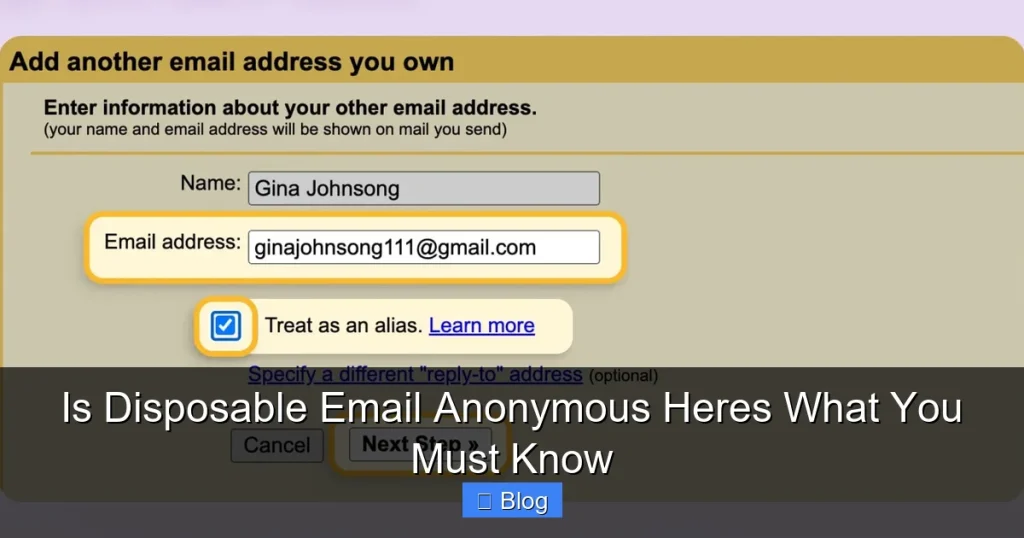
- Isolate identities: Create separate emails for different purposes (e.g., “shopping@domain.com” via SimpleLogin). If one leaks, others stay safe.
I switched to this system last year. Now, my banking uses ProtonMail + VPN, shopping uses SimpleLogin aliases, and spammy sites get disposable emails. It’s like having different outfits for different events—no single “identity” gets overexposed. For high-stakes anonymity, this beats disposable emails every time.
When to Actually Use Disposable Emails (Safely)
Disposable emails have their place—if used wisely:
- Always pair with a VPN: This hides your IP from the email service.
- Never reuse addresses: One email per site. If it expires, generate a new one.
- Avoid logging into other accounts: Don’t check Facebook via a disposable email session—cookies will link them.
Last month, I signed up for a shady gaming site. I used a disposable email + VPN + private browsing. Result? Zero spam, zero tracking. But I knew better than to access my email there—that’s how breaches happen.
Conclusion: Anonymity Is a Journey, Not a Destination
So, is disposable email anonymous? The short answer: sometimes, but never completely. They’re great for dodging spam or testing links—but they won’t hide you from determined trackers, data brokers, or hackers. Think of them as a privacy band-aid: useful for small cuts, useless for bullet wounds.
What I’ve learned after years of testing these tools? Real anonymity isn’t about one magic trick. It’s about layers: combining encrypted email, IP masking, and smart habits. If you take away one thing, let it be this: disposable emails are a starting point, not the finish line. Your digital safety depends on understanding their limits—and knowing when to upgrade your toolkit. Stay curious, stay cautious, and remember: in the privacy game, the only true anonymity is the kind you build yourself.
Frequently Asked Questions
Is disposable email anonymous?
Disposable email provides basic anonymity by masking your real address, but it’s not fully anonymous. Service providers and websites can still track your activity through IP addresses, device fingerprints, or linked accounts. True anonymity requires additional tools like VPNs or Tor browsers.
How anonymous are disposable email addresses really?
While disposable emails hide your primary inbox, they don’t conceal your IP address or digital footprint. Many services log connection details that can identify you if legally compelled. For sensitive anonymity needs, disposable emails alone are insufficient protection.
Can disposable emails be traced back to my real identity?
Yes, disposable emails can often be traced through metadata, IP logs, or if you reuse the same alias across platforms. Some providers retain usage data that could link activity to your device or network. Complete anonymity requires combining disposable emails with privacy-focused browsers and secure connections.
Are disposable emails safe for anonymous signups?
They offer convenience for low-risk signups but aren’t safe for truly anonymous activities. Financial transactions, illegal actions, or high-stakes privacy needs expose you to tracing risks. Always pair them with encrypted connections and avoid linking to personal accounts.
What makes disposable email anonymous (or not)?
Disposable email anonymizes your inbox address but fails to hide your IP, location, or behavioral patterns. The level of anonymity depends on the provider’s logging policies and whether you use additional privacy tools. Without these, your identity remains vulnerable to determined trackers.
Do disposable emails protect against email tracking?
They block sender-side tracking pixels in emails but don’t prevent website tracking during signup. Your IP address and browser fingerprint still leak data to the service you’re registering with. For full protection, use disposable emails alongside anti-tracking browser extensions.


