Temp mail expiration doesn’t have to ruin your day. You can easily stop temp mail from expiring by choosing the right services, using clever browser tricks, and linking accounts strategically. Discover simple, actionable steps to keep your disposable inbox alive for as long as you need it.
Key Takeaways
- Choose Long-Expiry Services: Prioritize temp mail providers like TempMail.org or Guerrilla Mail that offer addresses lasting 24+ hours, not just minutes.
- Use Browser Extensions: Install tools like “Temp Mail Extender” or “Mailvelope” to automatically refresh your temp inbox and prevent premature deletion.
- Manually Extend Addresses: Many services let you click “Extend” or “Renew” within the temp mail interface – do this before the countdown ends.
- Link to Permanent Accounts: Forward critical temp mail to your real email (if supported) to bypass expiration entirely.
- Avoid High-Risk Activities: Don’t use temp mail for banking, social media, or sensitive logins – stick to one-time verifications to reduce expiry triggers.
- Bookmark Your Inbox: Save the direct link to your specific temp mail address for quick access without losing it.
📑 Table of Contents
- Why Your Temp Mail Keeps Expiring (And Why It’s So Frustrating)
- Understanding Why Temp Mail Expires: The Service’s Perspective
- Choosing Temp Mail Services That Last Longer (The Smart Start)
- Manual Refresh & Session Management Tricks
- What NOT to Do: Avoiding Expiration Traps
- When Temp Mail Expiration is Actually a Good Thing (Security Matters!)
- Conclusion: Take Control of Your Temp Mail Experience
Why Your Temp Mail Keeps Expiring (And Why It’s So Frustrating)
We’ve all been there. You need a quick email address to sign up for a free trial, download a resource, or verify an account. You fire up your favorite temp mail service, grab that shiny new disposable address, and… poof! It vanishes before you even finish the sign-up process. That sinking feeling when you realize your verification email is trapped in an inbox that no longer exists? Pure frustration. Temp mail expiration isn’t just annoying; it can derail your plans, waste your time, and leave you locked out of things you actually wanted.
The core problem is simple: most free temp mail services are designed to be truly temporary. They operate on a “use it and lose it” model. Addresses expire quickly – sometimes in just 10 minutes, rarely more than an hour – to keep server costs low and prevent abuse. While this works for super-quick tasks, it fails miserably when you need a bit more time. Maybe the website is slow, you got distracted, or the verification email took a few minutes to arrive. Suddenly, your temp mail is gone, and you’re back to square one. The good news? You absolutely can stop temp mail from expiring quickly and easily. It just takes knowing the right tricks and tools.
Understanding Why Temp Mail Expires: The Service’s Perspective
Before we dive into solutions, it helps to understand why these services expire addresses so fast. It’s not (usually) personal! Free temp mail providers have significant operational challenges:
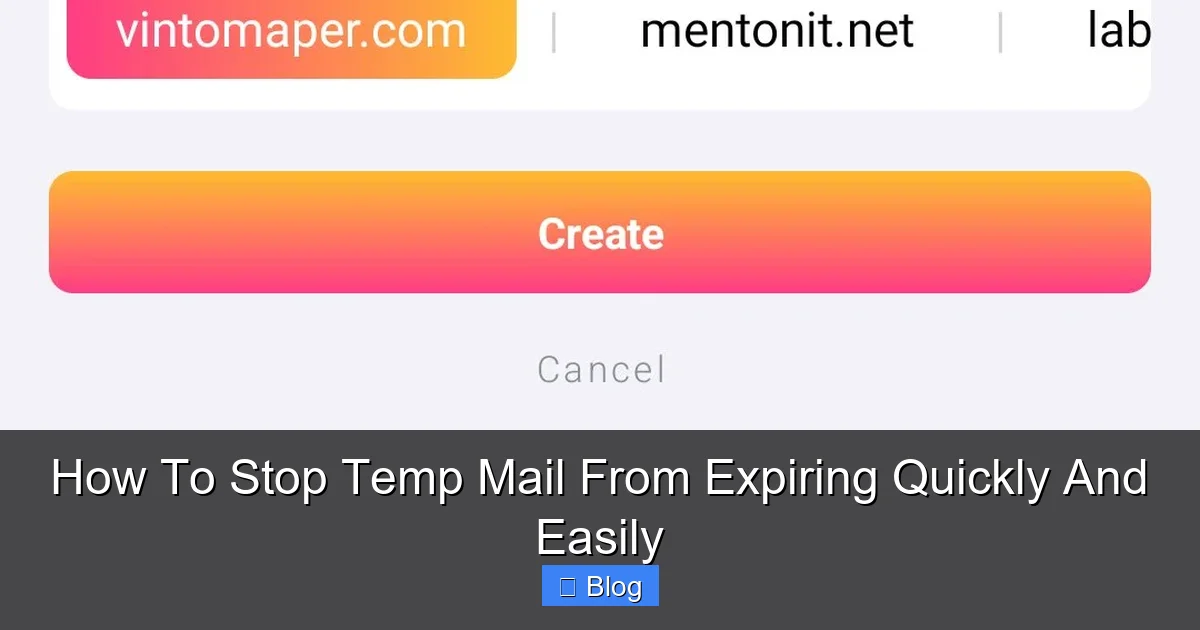
Visual guide about How To Stop Temp Mail From Expiring Quickly And Easily
Image source: image.winudf.com
- Server Costs: Storing emails, even temporarily, requires server space and bandwidth. Expiring addresses frees up resources quickly.
- Abuse Prevention: Spammers and scammers love temp mail. Short lifespans make it harder for them to conduct large-scale abuse.
- Resource Management: Millions of users generate millions of addresses. Automatic expiry ensures the system doesn’t get overwhelmed with stale data.
- Business Model: Many free services rely on ads. Shorter sessions mean more ad impressions per user over time.
This explains the standard short expiry (10-60 mins), but it doesn’t mean you’re powerless. Savvy users know how to work with the system, not against it. The key is recognizing that expiration is often a configurable feature or something you can actively manage, not an immutable law of the internet. By choosing the right service and using smart techniques, you can effectively stop temp mail from expiring on your timeline.
The “Extend” Button: Your First Line of Defense
Believe it or not, the simplest solution is often right in front of you. Many popular temp mail services include a built-in “Extend,” “Renew,” or “Keep Alive” button within the temp mail inbox itself. Here’s how to use it:
- After generating your temp address, keep the temp mail inbox tab open in your browser.
- Watch the countdown timer (usually displayed prominently).
- Click the “Extend” button BEFORE the timer hits zero. This typically resets the countdown, giving you another 10-60 minutes (sometimes more).
- Repeat as needed! Most services allow multiple extensions.
Pro Tip: Don’t wait until the last second! Click “Extend” when you have 2-3 minutes left. This gives you a buffer in case the website you’re signing up for is slow. Services like TempMail.org and 10MinuteMail are particularly good about offering clear extend options. This manual method is free, requires no extra tools, and is the easiest way to stop temp mail from expiring during a single session.
Choosing Temp Mail Services That Last Longer (The Smart Start)
If you’re constantly battling expiration, you might be using the wrong service. Not all temp mail providers are created equal when it comes to lifespan. Here’s how to pick ones designed for slightly longer use:
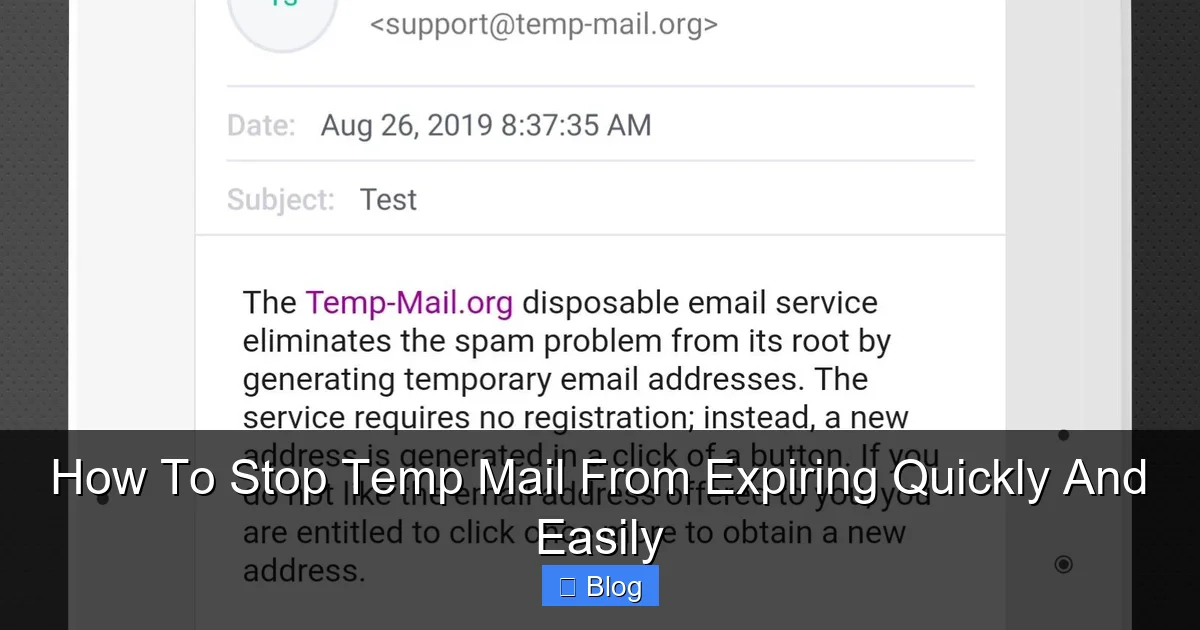
Visual guide about How To Stop Temp Mail From Expiring Quickly And Easily
Image source: image.winudf.com
- Look for “24-Hour” or “Long-Term” Options: Services like TempMail.org (offers addresses lasting up to 24 hours by default), Guerrilla Mail (provides 60-minute addresses but allows easy renewal), and Temp-Mail.org (offers 24-hour addresses) are built for slightly more extended needs. Avoid services advertising only “10-minute mail” if you need flexibility.
- Check for Custom Duration Settings: Some platforms, like Temp-Mail.io, let you choose how long your address lasts (e.g., 1 hour, 24 hours, 1 week) before generating it. This is ideal for planning ahead.
- Prioritize Services with Inbox Persistence: Certain providers (e.g., Mail.tm) create addresses that remain active as long as you access the inbox periodically, even if the initial timer is short. Regularly refreshing the page keeps it alive.
- Beware of “Unlimited” Claims: Truly unlimited free temp mail is rare and often unreliable. Focus on services with clearly stated, reasonable durations (24+ hours).
Real-World Example: Need to download a large ebook that requires email verification? Generate your address on TempMail.org (24-hour default). Sign up, grab the download link, and even if you get interrupted, your temp mail will still be there tomorrow. This strategic choice is the foundation for how to stop temp mail from expiring before you’re done.
Browser Extensions: Your Automated Temp Mail Lifesaver
Manually clicking “Extend” works, but it’s easy to forget. Browser extensions automate the process, acting as your personal temp mail bodyguard. They constantly monitor your temp mail inbox and refresh it or trigger the extend function before expiration. Here are top choices:
- Temp Mail Extender (Chrome, Firefox): This popular extension works with major services like 10MinuteMail and TempMail.org. Install it, navigate to your temp mail inbox, and it automatically clicks “Extend” for you at set intervals. Configure the refresh time (e.g., every 5 minutes) in the extension settings.
- Mailvelope (Chrome, Firefox – Primarily for PGP, but useful): While focused on encryption, Mailvelope can sometimes help manage temp mail sessions by keeping the connection active, preventing timeouts that lead to expiry.
- Custom Scripts (Advanced Users): Using tools like Tampermonkey, you can write or find simple scripts that auto-refresh the temp mail page. Search for “[Your Temp Mail Service] auto refresh script”.
How to Set Up Temp Mail Extender:
- Install the extension from the Chrome Web Store or Firefox Add-ons.
- Go to your preferred temp mail service (e.g., temp-mail.org).
- Generate a new address and open the inbox.
- Click the extension icon and set your desired refresh interval (e.g., 4 minutes for a 5-minute service).
- The extension will now silently keep your inbox alive!
This is arguably the most reliable way to stop temp mail from expiring without lifting a finger after setup. It’s perfect for longer sign-up processes or if you tend to get distracted.
Manual Refresh & Session Management Tricks
No extension? No problem. You can often prevent expiration through simple browser behavior and session management:
- The Constant Refresh: Periodically hit F5 or the browser’s refresh button on your temp mail inbox page. Many services reset the expiration timer with each page load. Refresh every 3-4 minutes for a 5-minute service.
- Keep the Tab Active: Simply having the temp mail inbox tab open and visible in your browser (not minimized or in the background) can sometimes prevent aggressive session timeouts. Don’t close the tab!
- Use Incognito/Private Mode Wisely: While incognito mode clears cookies on close, it can sometimes offer a “cleaner” session that lasts slightly longer on some services. However, remember closing the window kills the address.
- Bookmark the Specific Inbox URL: Instead of just bookmarking the homepage, bookmark the direct link to your generated inbox (e.g., `https://temp-mail.org/en/view/abc123`). This lets you jump straight back in without regenerating a new address, which might have a fresh short timer.
Critical Tip: Avoid logging out of the temp mail service or clearing your browser cookies/cache while using a temp address. This almost always destroys the session and the address immediately. These manual methods require a bit more attention but are effective free ways to stop temp mail from expiring.
Forwarding to Your Real Email: Bypass Expiration Altogether
For critical verifications where you know you’ll need the email later (like downloading a paid resource), consider forwarding the temp mail directly to your permanent email account. This makes the temp address irrelevant once the email arrives safely in your main inbox.
- Check Service Support: Some premium or advanced temp mail services (like Temp-Mail.io Pro or Mail.tm Premium) offer built-in email forwarding to any address. This is the cleanest solution.
- Use Email Client Rules (Advanced): If you have access to email client rules (e.g., in Thunderbird or Outlook), you could potentially set up a rule to forward emails sent to a specific temp address pattern to your main inbox. This is complex and service-dependent.
- The “Burner” Approach: Use a dedicated, rarely-used permanent email address (like a Gmail alias or a separate account just for sign-ups) as your “temp” address for important things. It’s not truly temporary, but it shields your main inbox and avoids temp mail expiry issues entirely.
While not all free services support forwarding, exploring premium options or using a dedicated secondary email are powerful strategies to completely sidestep the expiration problem for vital communications. It’s a proactive way to stop temp mail from expiring from affecting your access.
What NOT to Do: Avoiding Expiration Traps
Even with the best intentions, certain actions can accidentally trigger early expiration or make your temp mail useless. Steer clear of these common pitfalls:
- Using Temp Mail for Sensitive Accounts: Never use temp mail for banking, social media (Facebook, Instagram), email accounts, or anything requiring long-term access or recovery. These platforms often flag temp mail domains, leading to immediate account suspension or requiring a permanent email later – defeating the purpose and potentially locking you out.
- Ignoring the Countdown: Getting distracted is the #1 cause of expiration. Set a phone timer for 1-2 minutes before the expected expiry if you’re doing something else.
- Regenerating the Same Address: Some services let you “regenerate” an address, but this usually creates a brand new inbox, wiping any existing emails. Don’t do this unless you’re sure you don’t need the current inbox.
- Using Multiple Services Simultaneously for One Task: Don’t generate an address on Service A, then switch to Service B for the same sign-up. You’ll only confuse yourself and likely lose the verification email.
- Assuming All Services Work the Same: Expiry mechanisms vary wildly. Always check the specific rules (timer location, extend button) for the service you’re using that day.
Being mindful of these traps preserves your temp mail’s usefulness. Remember, the goal is to use temp mail strategically for low-risk, short-term needs where expiration is the main hurdle – not for everything. Smart usage is key to how to stop temp mail from expiring from causing problems.
When Temp Mail Expiration is Actually a Good Thing (Security Matters!)
While we’ve focused on preventing expiration, it’s crucial to acknowledge that some expiration is beneficial for security and privacy. Blindly trying to keep all temp mail alive indefinitely can backfire:
- Reduced Spam Exposure: Short-lived addresses ensure spam sent to them dies quickly, preventing your temp mail service from becoming a spam hub that could get blacklisted.
- Limited Damage from Leaks: If a temp address gets leaked or harvested, its short lifespan minimizes the window for abuse.
- Preventing Accidental Long-Term Use: Temp mail isn’t designed for ongoing communication. Forcing it to last too long increases the risk of missing important replies or using it inappropriately.
The Balanced Approach: Use the techniques above to extend temp mail only for the specific task at hand – the verification, the download, the one-time sign-up. Once that’s complete, let the address expire gracefully. Don’t try to maintain it for weeks “just in case.” Reserve longer-expiry services or forwarding for genuinely important one-off communications where you need a buffer, not for casual use. True security comes from using temp mail as intended: disposable and short-term, but with enough flexibility to complete your immediate need. Knowing how to stop temp mail from expiring when necessary, while respecting its purpose, is the smart user’s mindset.
Conclusion: Take Control of Your Temp Mail Experience
Temp mail expiration doesn’t have to be a recurring nightmare. By understanding why addresses vanish, choosing services designed for slightly longer use, leveraging browser extensions for automation, employing simple manual refresh tricks, and avoiding common pitfalls, you put yourself firmly in control. You now have a toolbox of practical, easy-to-implement strategies to stop temp mail from expiring right when you need it most.
Remember, the goal isn’t to fight the inherent nature of temp mail – it is meant to be temporary. The goal is to make that temporary window long enough to accomplish your specific task without frustration. Whether you’re grabbing a quick download, signing up for a newsletter, or verifying a one-time offer, these methods ensure your disposable inbox stays active on your schedule. Stop letting expiration dictate your online experience. Implement these tips today, and enjoy hassle-free, reliable temp mail whenever you need it. Your future self (and your inbox) will thank you!
Frequently Asked Questions
Can I really stop temp mail from expiring permanently?
No, truly permanent free temp mail addresses don’t exist due to server costs and abuse prevention. However, you can reliably extend addresses for hours or even days using the methods described (long-expiry services, extensions, forwarding), effectively stopping expiration for your immediate needs. Paid services offer longer durations but aren’t truly permanent.
Are browser extensions for temp mail safe to use?
Generally yes, for reputable extensions like Temp Mail Extender. Only install extensions from official browser stores (Chrome Web Store, Firefox Add-ons) with good reviews and clear privacy policies. They typically only interact with the specific temp mail site you’re on, not your other browsing. Avoid obscure extensions requesting excessive permissions.
Why does my temp mail expire even after I click “Extend”?
This usually happens if you click “Extend” too late (after the timer hits zero) or if the service has server issues. Always extend with 1-2 minutes left. If it persists, try a different temp mail service – some have more reliable renewal systems than others. Clearing browser cookies/cache for that site might also help reset the session.
Is using temp mail for important accounts risky?
Yes, very risky. Platforms like social media, banks, and email providers often block or distrust known temp mail domains. Using temp mail for these can lead to immediate account suspension, loss of access, or inability to recover your account later. Reserve temp mail only for low-stakes, one-time verifications where losing access isn’t critical.
Do paid temp mail services solve the expiration problem?
Paid services (like Temp-Mail.io Pro or Mail.tm Premium) generally offer significantly longer address lifespans (days or weeks), dedicated addresses, and features like email forwarding. They are the most reliable solution for needing a temp address beyond a few hours, but they aren’t free. For most users, free services combined with extension techniques are sufficient.
Can I recover an email if my temp mail already expired?
Almost never. Once the address expires, the inbox is permanently deleted from the service’s servers. There is no “trash” or recovery option. This is why using the extend features, extensions, or forwarding before expiration is crucial. If you missed a critical email, you’ll likely need to restart the sign-up process with a new temp address.