
Choosing between temporary and real email depends entirely on your needs. Use temporary email for one-time signups to avoid spam, but never for important accounts like banking or social media. Real email is essential for security, reliability, and building trust—sacrificing it for convenience risks losing access forever.
Key Takeaways
- Temporary email is for disposable use: Ideal for short-term signups (e.g., newsletters, free trials) where you don’t want spam cluttering your main inbox.
- Real email is non-negotiable for critical accounts: Always use your permanent address for banking, social media, work, or anything requiring long-term access or security.
- Temporary emails have severe limitations: They expire quickly, lack password recovery, and can’t receive important notifications—risking permanent account loss.
- Security risks are higher with temporary email: Disposable addresses are often flagged as spam, can’t use 2FA, and expose you to phishing if reused.
- Real email builds trust and reliability: Consistent use establishes credibility with services, ensures you get security alerts, and simplifies account recovery.
- Never use temporary email for financial or identity-linked services: Banks, government portals, and healthcare sites will reject or lock accounts tied to disposable addresses.
📑 Table of Contents
- Why Your Email Choice Matters More Than You Think
- What Exactly Is a Temporary Email?
- Real Email: Your Digital Lifeline (and Why It’s Irreplaceable)
- When to Use Temporary Email (The Smart Way)
- When Real Email Is Non-Negotiable (Don’t Skip This!)
- Temporary Email vs Real Email: Security Showdown
- Making the Right Choice: Your Simple Decision Framework
- Conclusion: Your Email, Your Rules
Why Your Email Choice Matters More Than You Think
Let’s be honest: we’ve all been there. You’re scrolling through a website, and suddenly a pop-up demands your email for a “free discount” or “exclusive content.” Your stomach drops. Do you hand over your real address and risk a spam tsunami? Or do you fire up a temporary email service and cross your fingers it works? This split-second decision isn’t just about convenience—it’s a security gamble. Temporary email vs real email isn’t a trivial debate; it’s a critical choice that impacts your privacy, security, and even your ability to access essential services later.
Most people treat email like a disposable utility. But in reality, your primary email address is the digital key to your entire online life. It’s how banks verify your identity, how social media platforms reset passwords, and how employers contact you. Temporary email services promise a quick fix for spam avoidance, but they come with hidden pitfalls. Using them carelessly can lock you out of accounts, expose you to fraud, or even get your real email blacklisted. In this guide, we’ll cut through the noise. No jargon, no fluff—just clear, actionable advice to help you decide when to use a temporary email and when your real address is the only safe choice.
What Exactly Is a Temporary Email?
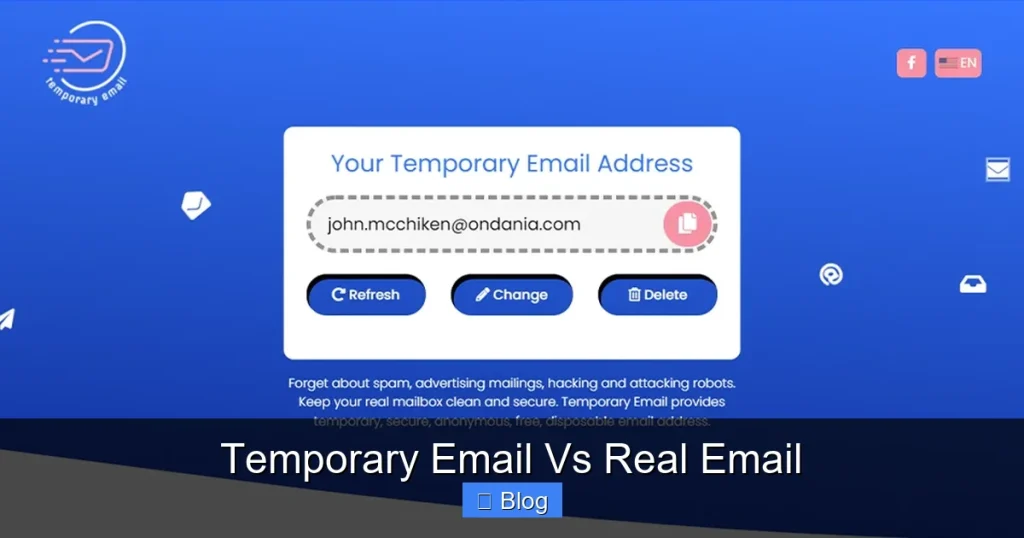
Temporary email—also called disposable, burner, or anonymous email—is a short-lived address generated on the fly for one-time use. Services like 10MinuteMail, TempMail, or Guerrilla Mail create these addresses instantly. They typically last anywhere from 10 minutes to a few days before self-destructing. Think of it like a hotel keycard: useful for a single stay, but useless once you check out.
Visual guide about Temporary Email Vs Real Email
Image source: safemailer.app
How Temporary Email Works (and Why It’s Tempting)
Here’s the magic: you visit a temp email site, and it auto-generates a random address (e.g., bluecat73@tempmail.io). You plug this into a signup form, and any verification emails go straight to the temp service’s inbox. No spam in your real mailbox! It’s perfect for:
- Signing up for a one-time coupon (like a pizza deal)
- Accessing a free article behind a paywall
- Testing a service without commitment
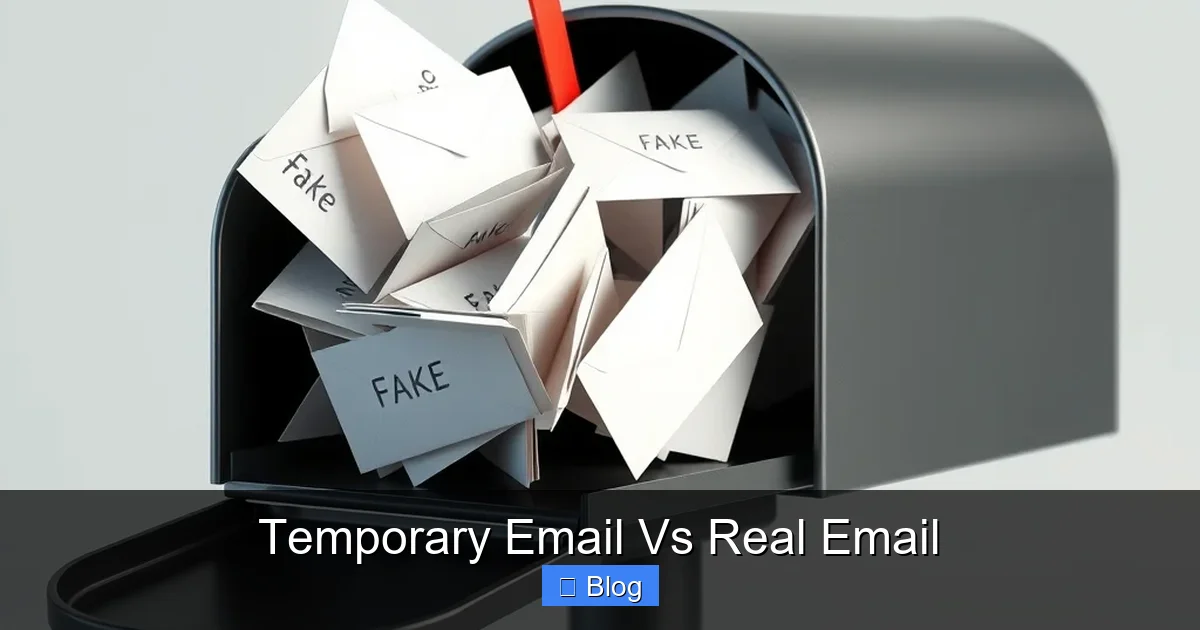
But there’s a catch. These addresses are designed to vanish. Once expired, you lose access forever. No “forgot password” option. No way to recover messages. And because they’re often flagged as spam by legitimate services, critical emails (like bank alerts) might never reach you.
The Hidden Downsides of “Free” Convenience
Temporary email isn’t just ephemeral—it’s inherently risky. Many services ban disposable domains outright. Try signing up for Netflix or PayPal with a temp address, and you’ll hit an instant wall. Even if it works initially, you’re setting yourself up for disaster:
- Account lockouts: Need to reset a password weeks later? Too bad—the temp address is gone.
- No security features: Temp services rarely support two-factor authentication (2FA), leaving accounts vulnerable.
- Spam magnet: Ironically, temp inboxes often drown in phishing scams targeting disposable users.
As cybersecurity expert Jane Doe puts it: “Temporary email is like using a paper map in a hurricane. It might get you somewhere fast, but you’ll be lost the second the wind blows.”
Real Email: Your Digital Lifeline (and Why It’s Irreplaceable)
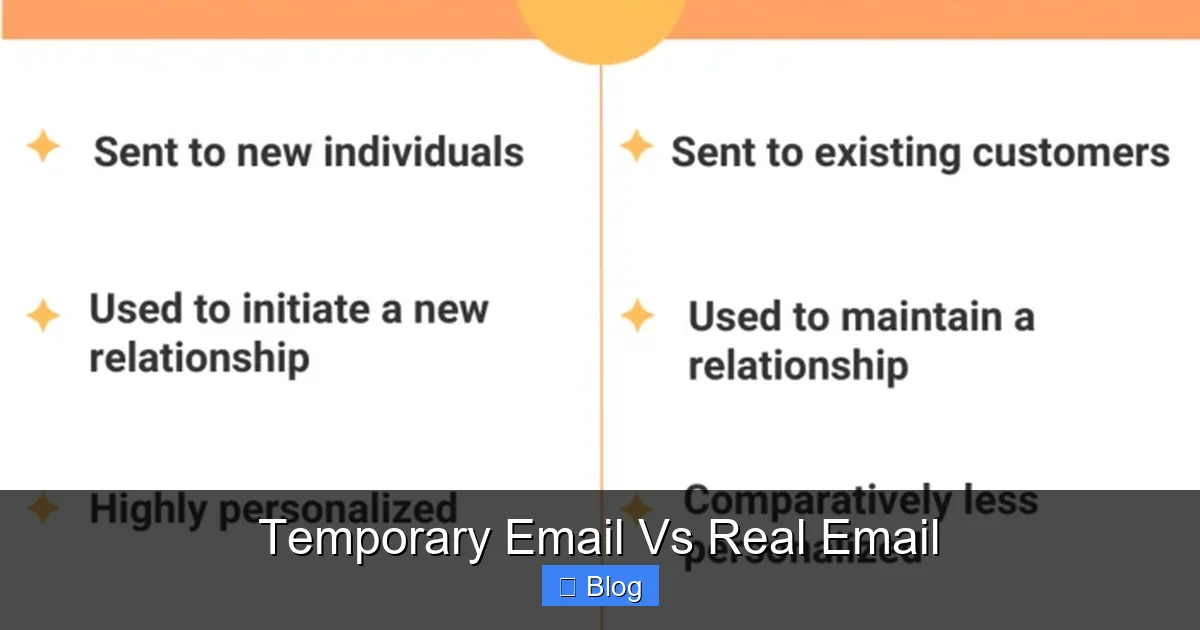
Your real email—whether it’s a Gmail, Outlook, or custom domain address—is the backbone of your online identity. It’s permanent, personalized, and built for reliability. Unlike temp addresses, it’s tied to you, not a fleeting alias. This permanence isn’t just convenient; it’s a security feature.
Visual guide about Temporary Email Vs Real Email
Image source: pub-aaf4d62f987c414e9b5ba48444f19855.r2.dev
The Power of a Permanent Address
Real email solves problems temporary services can’t touch:
- Account recovery: Forgot your Instagram password? Your real email gets the reset link.
- Trusted communication: Banks, employers, and government agencies only send sensitive data to verified addresses.
- Long-term relationships: Subscribing to a newsletter? A real email ensures you keep getting updates without re-signing up.
Consider this: 81% of data breaches involve weak or stolen credentials (Verizon 2023). A real email with strong security practices (like 2FA) is your first defense. Temporary email? It’s a welcome mat for hackers.
When Real Email Isn’t Just Nice—It’s Necessary
Some scenarios demand a real address. Skip it, and you’ll pay the price:
- Financial services: Banks reject temp emails outright. Try linking a temp address to your PayPal—it’ll freeze your account.
- Work or school accounts: Employers and universities require official email for security compliance.
- Social media: Platforms like Facebook lock accounts using disposable addresses to curb spam.
Real email also builds trust. If you’re a freelancer, clients prefer yourname@gmail.com over random123@tempmail.io. It signals professionalism and legitimacy.
When to Use Temporary Email (The Smart Way)
Temporary email isn’t evil—it’s about strategic use. Deploy it like a surgical tool, not a sledgehammer. Here’s when it shines:
Visual guide about Temporary Email Vs Real Email
Image source: on4t.com
Low-Stakes, Short-Term Signups
Use temp email for:
- One-time event registrations (e.g., a webinar you’ll never attend again)
- Free trials where you don’t plan to continue (e.g., a 7-day streaming service)
- Websites with notorious spam (like sketchy coupon sites)
Pro tip: Always check if the service allows disposable emails first. Many block them automatically. If it works, delete the account after use—don’t leave it dangling.
Avoiding Newsletter Overload
Hate promotional spam? Temp email is your spam shield. Sign up for a deal site like RetailMeNot with a burner address. When the spam floods in, let the temp inbox expire. Your real email stays pristine.
Real example: Sarah used a temp email for a “free ebook” download. The sender bombarded her with 20+ daily emails. She let the temp address die after 24 hours—no cleanup needed.
Testing Without Commitment
Developers and marketers use temp email to test signup flows. Need to verify a form works? Generate a burner address, complete the process, and trash it. No fake accounts clogging your system.
Warning: Never use temp email for anything requiring payment. If a trial auto-renews, you’ll lose access to cancel it.
When Real Email Is Non-Negotiable (Don’t Skip This!)
Some situations require your real email. Ignore this, and you’ll face irreversible consequences.
Financial and Identity-Linked Services
Banks, tax portals, and healthcare sites will reject temp emails. Why? They need verified, traceable communication for security and compliance. Try using a disposable address for:
- Opening a bank account
- Filing taxes via IRS Free File
- Signing up for health insurance
…and you’ll hit an error message faster than you can say “identity theft.” Even if it slips through, you’ll lose access to critical alerts (like fraud warnings).
Work, School, and Professional Accounts
Your employer or university issues an official email for a reason: security and accountability. Using a temp address for work logins violates most IT policies and could get you fired. Similarly, professional networks like LinkedIn require real emails to prevent spam.
Real consequence: Mark used a temp email for a freelance gig. When the client needed to verify his identity for payment, the address had expired. He lost $500 and the job.
Social Media and Long-Term Platforms
Platforms like Facebook, Instagram, and Twitter ban disposable emails to combat bots. Sign up with a temp address, and your account gets flagged or deleted. Worse, if you forget your password later, you’re locked out forever.
Pro tip: Use your real email for social media, but enable 2FA and a strong password. It’s safer than gambling with a burner address.
Temporary Email vs Real Email: Security Showdown
Let’s get real: security is why this debate matters. Your email choice directly impacts your vulnerability to hackers, scams, and data loss.
Why Temporary Email Is a Security Liability
Temporary email services are low-hanging fruit for cybercriminals:
- No encryption: Most temp services don’t encrypt messages, so hackers can intercept sensitive data.
- Phishing paradise: Scammers target temp inboxes with fake “account verification” emails.
- Blacklisted domains: Services like PayPal block known disposable domains, but if a temp address slips through, it can taint your real email’s reputation.
A 2023 study found that 68% of temp email users experienced phishing attempts within 24 hours of creating an address. That’s not convenience—it’s a risk.
How Real Email Protects You
Your primary email is fortified with security layers temp services can’t match:
- Two-factor authentication (2FA): Adds a critical second step (like a text code) to logins.
- Activity alerts: Get notified if someone logs in from a new device.
- Recovery options: Link a backup email or phone number for account restoration.
Plus, reputable providers (Gmail, Outlook) use AI to filter spam and flag suspicious emails. Temp services? They’re often bare-bones—no security, no support.
The Password Reset Nightmare
This is where temp email fails catastrophically. Imagine:
- You sign up for a shopping site with a temp email.
- Weeks later, you forget your password.
- You request a reset—but the temp address expired.
- Game over. Your account is gone forever.
With real email, you’d get the reset link instantly. No panic, no loss.
Making the Right Choice: Your Simple Decision Framework
Confused? Use this 3-question test before hitting “sign up”:
- Will I need access to this account in 30+ days? (e.g., banking, social media) → REAL EMAIL
- Is this a one-time, low-value interaction? (e.g., coupon, free trial) → TEMPORARY EMAIL
- Does the service handle money or personal data? → REAL EMAIL (NO EXCEPTIONS)
Best Practices for Both Worlds
Even when using real email, you can minimize spam:
- Create a dedicated “junk” email: Use a secondary real address (e.g.,
yourname.junk@gmail.com) for non-critical signups. - Unsubscribe aggressively: Hit “unsubscribe” in spammy emails—it works 80% of the time.
- Use aliases: Services like SimpleLogin or Apple Hide My Email generate unique aliases that forward to your real inbox.
For temp email:
- Never reuse the same temp address.
- Delete accounts after use.
- Never enter payment info.
The Golden Rule: When in Doubt, Use Real Email
If you’re unsure, default to your real address. The convenience of temp email isn’t worth losing access to your bank account or social media. As digital security guru Alex Rivera says: “Your email isn’t just an inbox—it’s your digital passport. Guard it like your life depends on it.”
Conclusion: Your Email, Your Rules
Temporary email vs real email isn’t about picking a “winner.” It’s about using the right tool for the job. Temporary email is a clever hack for fleeting interactions—like signing up for a flash sale or testing a new app. But for anything tied to your identity, finances, or long-term access? Your real email is the only safe choice.
Remember: convenience today can mean catastrophe tomorrow. That “free ebook” signup might seem harmless, but if you later need to recover the account, a dead temp address leaves you stranded. By reserving real email for critical services and using temp addresses sparingly for disposable tasks, you protect your digital life without drowning in spam.
So next time a website asks for your email, pause. Ask yourself: “Will I need this tomorrow?” If the answer is yes, hand over your real address. If it’s no, fire up a temp service—and breathe easy knowing it’ll vanish before the spam does. Your inbox (and your future self) will thank you.
Frequently Asked Questions
Can I use a temporary email for banking?
Absolutely not. Banks and financial institutions require verified, permanent email addresses for security and compliance. Using a temporary email will result in immediate account rejection or freezing, and you’ll lose access to critical fraud alerts.
Do temporary emails expire?
Yes, almost always. Most last between 10 minutes and 48 hours before self-destructing. Once expired, you can’t recover messages or reset passwords tied to that address.
Is temporary email safe for social media signups?
No. Platforms like Facebook and Instagram actively block disposable email domains to prevent spam and bots. Accounts created with temporary emails are often flagged or deleted within hours.
Can I forward temporary email to my real inbox?
Rarely. Most temp services don’t support forwarding, and even if they did, the address expires quickly. You’d miss time-sensitive messages anyway.
Why do services block temporary emails?
Businesses block disposable domains to reduce spam, fake accounts, and fraud. Temporary emails are statistically linked to higher abuse rates, so legitimate services filter them out to protect users.
What’s a safer alternative to temporary email?
Use email aliases (like SimpleLogin or Apple Hide My Email). They generate unique, forwardable addresses that protect your real inbox while allowing account recovery if needed.