
Stop giving out your real email address! Temporary email services create disposable inboxes that vanish after use, blocking spam, phishing, and data breaches. They’re your secret weapon for safe online sign-ups, free trials, and anonymous browsing—keeping your primary inbox clean and secure.
Key Takeaways
- Spam Shield: Temporary emails absorb unwanted newsletters and promotions, preventing your main inbox from flooding with junk mail.
- Privacy Guardian: Avoid sharing your real email for one-time actions, reducing exposure to data leaks and targeted tracking.
- Phishing Defense: Suspicious sign-up requests? Use a temp inbox to test links safely without risking your primary account.
- Free Trial Savior: Sign up for services without commitment—temp emails expire before billing cycles start.
- Easy & Instant: Generate a disposable address in seconds; no downloads or complex setups required.
- Limitations Exist: Not for important communications—temp inboxes lack recovery options and long-term reliability.
- Choose Wisely: Prioritize services with strong privacy policies, encryption, and no-logs commitments.
📑 Table of Contents
- Why Your Inbox Deserves a Bodyguard (And How Temp Emails Deliver)
- How Temporary Email Temporary Inboxes Actually Work (No Tech Degree Needed)
- 7 Game-Changing Benefits of Using a Temporary Email Temporary Inbox
- How to Use a Temporary Email Temporary Inbox: A Step-by-Step Guide
- What Temporary Email Temporary Inboxes Can’t Do (Important Limitations)
- Choosing the Best Temporary Email Service: 5 Must-Check Features
- Conclusion: Your Inbox, Reclaimed
Why Your Inbox Deserves a Bodyguard (And How Temp Emails Deliver)
Let’s be real: your primary email inbox is a mess. It’s cluttered with expired promo codes, sketchy newsletter sign-ups, and forgotten free trial confirmations. You’ve probably hesitated before entering your real email on a new website, wondering, “Will this lead to spam hell?” You’re not alone. Every day, millions of users unknowingly hand over their personal email addresses for one-time actions—like downloading a PDF, joining a webinar, or verifying a social media account. The result? Your inbox becomes a target for phishing scams, data brokers, and relentless marketing blasts.
Enter the temporary email temporary inbox—your digital bodyguard. Think of it as a disposable alias for your online life. Instead of sharing your real address, you generate a random, short-lived email (like bluecat73@tempmail.io) that self-destructs after hours or days. All messages sent to this address land in a temporary inbox you control, then vanish forever. No traces left behind. No spam migrating to your main account. It’s like using a fake name at a party—you get the interaction without the hangover.
This isn’t just convenient; it’s a privacy necessity. With data breaches hitting record highs (over 6 billion records exposed in 2023 alone), protecting your primary email is non-negotiable. Temporary email services cut the risk at the source. In this guide, we’ll unpack how they work, why you need one, and how to use them like a pro—without sacrificing security.
How Temporary Email Temporary Inboxes Actually Work (No Tech Degree Needed)
Forget complex jargon. Temporary email services operate on a simple principle: create, use, destroy. Here’s the behind-the-scenes magic:

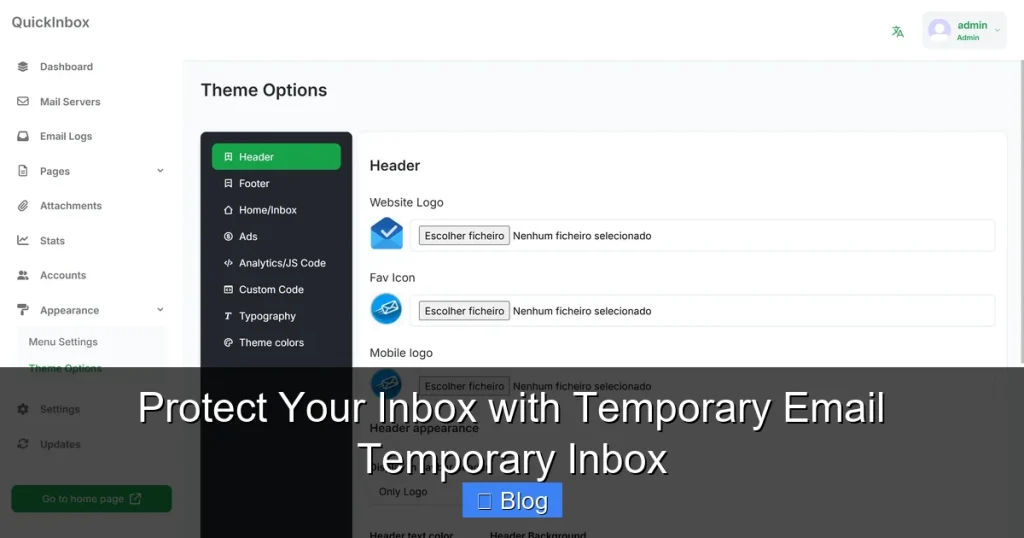
Visual guide about Protect Your Inbox with Temporary Email Temporary Inbox
Image source: codester.com
The 3-Step Lifecycle of a Temp Email
When you visit a temp email site (like TempMail, Guerrilla Mail, or 10MinuteMail), it instantly generates a random address—say, jumpingpanda@mailtemp.org. This address isn’t tied to your identity. Behind the scenes:
- Step 1: Generation—The service creates a unique email using algorithms (e.g., random words + numbers + domain).
- Step 2: Routing—Any email sent to this address is intercepted by the service’s servers and displayed in your temporary inbox.
- Step 3: Expiration—After a set time (5 minutes to 48 hours), the address self-destructs. All messages are permanently deleted.
No data is stored long-term. Reputable providers like TempMail.org or Maildrop.cc explicitly state they don’t log IP addresses or message content. It’s ephemeral by design—like a sandcastle washed away by the tide.
Why This Beats “Burner” Email Accounts
You might wonder: “Can’t I just create a new Gmail account?” Technically, yes—but it’s clunky and risky. Real email accounts require:
- Personal details (phone number, recovery email)
- Long-term management (password resets, storage limits)
- Traceability (Google links activity to your identity)
Temporary email temporary inboxes skip all that. They’re anonymous, instant, and require zero commitment. Perfect for:
- Downloading a whitepaper from a vendor’s site
- Signing up for a one-time event (e.g., a live webinar)
- Testing a new app without committing your real email
Example: You find a cool productivity tool offering a free trial. Instead of using your work email (which could flag you for sales calls), you grab a temp address. The trial confirmation lands in your disposable inbox—no spam, no follow-ups.
7 Game-Changing Benefits of Using a Temporary Email Temporary Inbox
Let’s cut through the hype. Why should you care about temp emails? Here’s how they solve real problems:
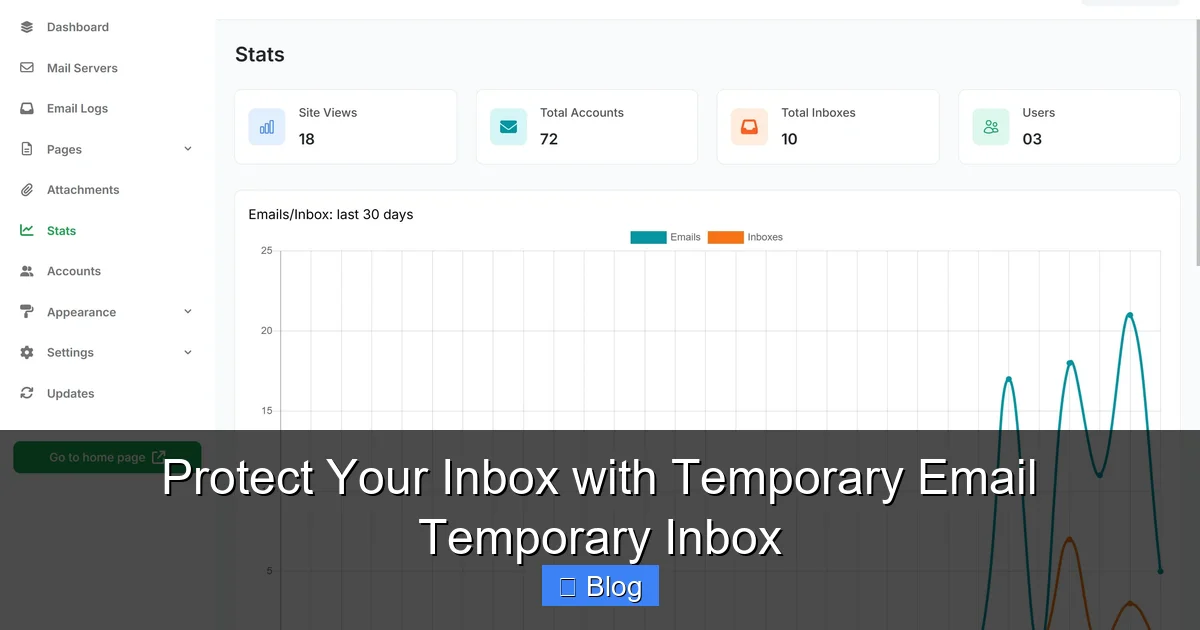
Visual guide about Protect Your Inbox with Temporary Email Temporary Inbox
Image source: codester.com
1. Annihilate Spam Before It Starts
That “10% off your first order” pop-up? It’s a spam trap. By using a temp email, you:
- Prevent retailers from adding you to marketing lists
- Avoid future promotions (e.g., “We miss you!” emails)
- Stop data brokers from scraping your address for targeted ads
Real-world impact: A study by Statista found 45% of all email traffic is spam. Temp emails block this at the source—your main inbox stays pristine.
2. Dodge Phishing and Scams
Phishing attacks often start with fake sign-up pages. Example:
- You click a “Claim Your Prize!” link on social media
- It asks for your email to “verify eligibility”
- Using a temp inbox lets you test the link safely
If the site tries to steal credentials, your real email remains untouched. Services like Temp-Mail.org even flag suspicious senders automatically.
3. Protect Your Identity in Data Breaches
When sites like LinkedIn or Yahoo get hacked, your email is often the first thing leaked. If you used a temp address for that account:
- Hackers get a useless, expired email
- Your real identity stays hidden
- No risk of credential-stuffing attacks on your main accounts
Pro tip: Always use a unique temp email for each high-risk site (e.g., gaming forums, coupon hubs).
4. Master Free Trials Without the Headache
Free trials are notorious for auto-charging you. Temp emails help by:
- Expiring before billing cycles start (e.g., a 24-hour temp email for a 7-day trial)
- Preventing “reminder” emails from cluttering your inbox
- Making it easy to abandon the service guilt-free
Example: Signing up for a meditation app’s free week? Use a 48-hour temp email. When it expires, so does your access—no payment details needed.
5. Keep Personal and Professional Lives Separate
Using your work email for personal stuff (like ordering pizza) is risky. Temp emails let you:
- Sign up for hobby forums without HR seeing
- Receive order confirmations privately
- Avoid mixing business contacts with personal spam
Bonus: No more awkward “Why did you email *that* site?” conversations.
6. Browse Anonymously on Sketchy Sites
Some sites demand email verification just to view content (looking at you, pirated movie hubs). Temp emails let you:
- Access content without leaving a digital footprint
- Avoid malware-laden “verification” pages
- Stay anonymous in communities where privacy matters
Note: Never use temp emails for illegal activities—providers may comply with legal requests.
7. Simplify Account Management
Forgot which sites you signed up for? Temp emails act as breadcrumbs:
- If spam arrives at catlover99@tempmail.io, you know it came from that cat forum
- Easily track which services sold your data
- Delete entire “identities” with one click
It’s like having a spam detective in your pocket.
How to Use a Temporary Email Temporary Inbox: A Step-by-Step Guide
Ready to try it? Here’s how to set up and use a temp email in under 60 seconds:
Step 1: Pick a Reputable Service
Not all temp email providers are equal. Avoid sketchy sites that:
- Inject ads into your inbox
- Log your activity
- Have weak security
Top trusted options:
- TempMail.org: Custom domains, 24-hour expiry, no ads
- Maildrop.cc: Open-source, 24-hour retention, privacy-focused
- 10MinuteMail.com: Simple interface, 10-minute expiry (extendable)
Always check their privacy policy—look for “no logs” and “SSL encryption.”
Step 2: Generate Your Temp Address
Visit your chosen site. Most auto-generate an address like purplefrog@mailtemp.org. You can often:
- Customize the prefix (e.g., myfreebook@tempmail.io)
- Choose expiry time (5 min to 48 hours)
- Select a domain (e.g., @gmail.com, @yahoo.com for realism)
Pro tip: Use a descriptive prefix so you remember why you created it (e.g., netflix-trial@tempmail.io).
Step 3: Use It Like a Real Email
Copy your temp address and paste it wherever an email is required—sign-up forms, download gates, etc. When someone sends a message:
- It appears instantly in your temp inbox
- You can read, reply, or forward it (replies go from the temp address)
- Attachments download normally
Example: Downloading an ebook? Paste your temp email. The PDF link arrives in seconds—no spam follow-up.
Step 4: Let It Expire (Or Extend It)
Most services auto-delete addresses after expiry. If you need more time:
- Click “Extend” on sites like 10MinuteMail
- Generate a new address with the same prefix (e.g., myfreebook2@tempmail.io)
Never use temp emails for critical communications—like password resets. If the address expires, you lose access forever.
Advanced Tips for Power Users
- Bookmark your inbox: Save the temp inbox URL to revisit later.
- Use browser extensions: Tools like “Temp Mail” for Chrome auto-fill forms with disposable addresses.
- Combine with aliases: Services like SimpleLogin create permanent aliases that forward to your real inbox—ideal for semi-permanent use.
Remember: Temp emails are for low-stakes actions. For banking or healthcare, always use your real address with 2FA.
What Temporary Email Temporary Inboxes Can’t Do (Important Limitations)
Temp emails are powerful, but they’re not magic. Know these limits to avoid frustration:
No Long-Term Reliability
Since addresses expire:
- You can’t recover messages after expiry
- Services won’t send important updates (e.g., “Your account is locked”)
- Password resets won’t work if the address is gone
Solution: Only use temp emails for one-off actions. For recurring services (like Netflix), use a dedicated alias or secondary email.
Limited Security Against Sophisticated Attacks
Temp emails won’t stop:
- Malware from infected attachments
- Session hijacking on the temp email site itself
- IP tracking (some providers log IPs temporarily)
Mitigation: Use HTTPS sites, avoid clicking suspicious links, and pair with a VPN.
Potential for Blacklisting
Some services block known temp email domains (e.g., @tempmail.io). If your sign-up fails:
- Try a different provider (e.g., switch from TempMail to Maildrop)
- Use a custom domain if supported
- Fall back to a permanent alias service
Fun fact: Sites like LinkedIn and PayPal aggressively block temp emails to prevent fraud.
No Customer Support
Forget contacting “support@tempmail.io” if something goes wrong. These services are:
- Often free and community-run
- Designed for anonymity—no accounts to manage
- Not liable for lost data
Bottom line: Treat temp emails as disposable tools, not primary communication channels.
Choosing the Best Temporary Email Service: 5 Must-Check Features
With hundreds of options, how do you pick a winner? Prioritize these:
1. Privacy Policy Transparency
Look for:
- “No logs” of messages or IP addresses
- Clear data retention periods (e.g., “Messages deleted after 1 hour”)
- GDPR/CCPA compliance
Avoid services that sell anonymized data—even if “anonymous,” it can be re-identified.
2. Security Protocols
Essential features:
- SSL/TLS encryption (look for 🔒 in the URL)
- No third-party trackers in the inbox
- Open-source code (auditable for backdoors)
Example: Maildrop.cc publishes its code on GitHub—trustworthy!
3. Customization Options
Better services let you:
- Choose expiry times (10 min to 7 days)
- Pick realistic domains (e.g., @gmail.com)
- Set custom prefixes
This helps bypass domain blacklists on strict sites.
4. User Experience
Test for:
- Mobile-friendly design
- Ad-free inboxes (some inject ads into messages)
- One-click copy/paste for addresses
Clunky interfaces increase error risk—opt for simplicity.
5. Reputation and Uptime
Check:
- User reviews on Reddit or Trustpilot
- Uptime history (use Downdetector)
- How long the service has existed (older = more reliable)
Red flag: Sites that disappear overnight with your data.
Conclusion: Your Inbox, Reclaimed
Let’s face it—your email inbox is under siege. Every sign-up form, free download, and “exclusive offer” is a potential gateway for spam, scams, and data leaks. But you don’t have to surrender your privacy. A temporary email temporary inbox is the ultimate low-effort, high-impact shield. It’s fast, free, and puts you back in control.
Think of it as digital hygiene: just like you wouldn’t reuse a tissue, why reuse your email address for throwaway interactions? By generating disposable inboxes for one-time actions, you:
- Keep your primary inbox focused on what matters
- Reduce exposure to phishing and breaches
- Reclaim hours of time spent deleting spam
Start small. Next time you download a template or join a webinar, grab a temp email. Notice how your main inbox stays calm. Notice the peace of mind. That’s the power of a temporary email temporary inbox—not just a tool, but a mindset shift toward intentional online living.
Your email is your digital identity. Guard it fiercely. And remember: in a world of data vampires, a disposable inbox is your garlic.
Frequently Asked Questions
Are temporary email services legal?
Yes, using temporary email services is completely legal. They’re designed for privacy protection and legitimate use cases like avoiding spam. However, using them for illegal activities (e.g., fraud) remains unlawful regardless of the email type.
Can I receive important emails in a temporary inbox?
You can receive them temporarily, but it’s not recommended for critical communications. Since temp inboxes expire, you risk losing access to password resets, bank alerts, or legal notices. Always use your primary email for important accounts.
Do temporary emails work with all websites?
Most sites accept them, but some (like banking or government portals) block known temp email domains to prevent abuse. If a sign-up fails, try a different provider or use a permanent email alias service instead.
Are temporary emails secure against hackers?
Temporary emails add a layer of security by hiding your real address, but they don’t make you invincible. Avoid clicking suspicious links in temp inboxes, and pair them with strong passwords and 2FA for maximum protection.
Can I use a temporary email for social media sign-ups?
Many social platforms (like Facebook or Twitter) block temp emails to curb fake accounts. You might get temporary access, but your account could be flagged or banned. For social media, use a dedicated secondary email instead.
How long do temporary emails typically last?
Expiry times vary: most last 10 minutes to 48 hours. Services like 10MinuteMail default to 10 minutes (extendable), while TempMail.org offers up to 24 hours. Always check the provider’s settings before generating an address.